How to Reset Preschool Learning Routines After Spring Break
Resetting Learning Routines After Spring Break: A Gentle Guide for Preschool Teachers and Homeschool Moms
Spring break is a much-needed pause for kids and grown ups alike! But, when the break ends, getting preschoolers back into a learning rhythm can feel like starting from the beginning. 🙃 Whether you're managing a classroom full of energetic little learners or guiding your own child at home, the key to getting your routine back is to ease back into that structure with patience, intention, and a bit of creativity.
Here’s how to reset your preschool learning routine in a way that feels natural, inviting, and sustainable.
1. Start with Connection Before Correction
After a break, children often need to reconnect before they’re ready to follow routines well again. Spend the first day or two focusing on building relationships rather than following rules.
In classrooms: Begin with circle time conversations about spring break experiences and sharing good things they can remember about their time away.
At home: Share stories, look at photos, or simply spend time playing together.
When children feel emotionally secure and connected, they’re much more willing to structure and learning.
2. Reintroduce Routines Gradually
Jumping straight back into a full, regular schedule after some time of total relaxation can overwhelm preschoolers. So, instead, try to add parts of routines back in step by step.
Day 1–2: Focus on morning routines and one or two structured activities.
Day 3–4: Add more transitions, like snack time routines or clean-up expectations.
By the end of the week: Return to your full schedule.
Consistency matters more than speed here, so going slowly will help things feel more calm and effective.
If you need some ideas for how to create a routine, check out these tips.
3. Keep Expectations Realistic
It’s normal for children to forget rules, routines, and even basic skills after a little time off. You can expect (and even plan for) a little bit of regression.
Re-teach routines like lining up, sharing, or cleaning up.
Model behaviors and gently remind kids instead of immediately correcting.
Celebrate little wins to build their confidence.
Think of this as a time to “refresh” your routines and re-teach any parts that need some revisiting.
4. Bring Back Favorite Activities First
Starting your days with the most familiar and loved activities help kids feel comfortable and excited to start back again.
In classrooms: Reintroduce popular centers, songs, or group games to bring on the fun first thing!
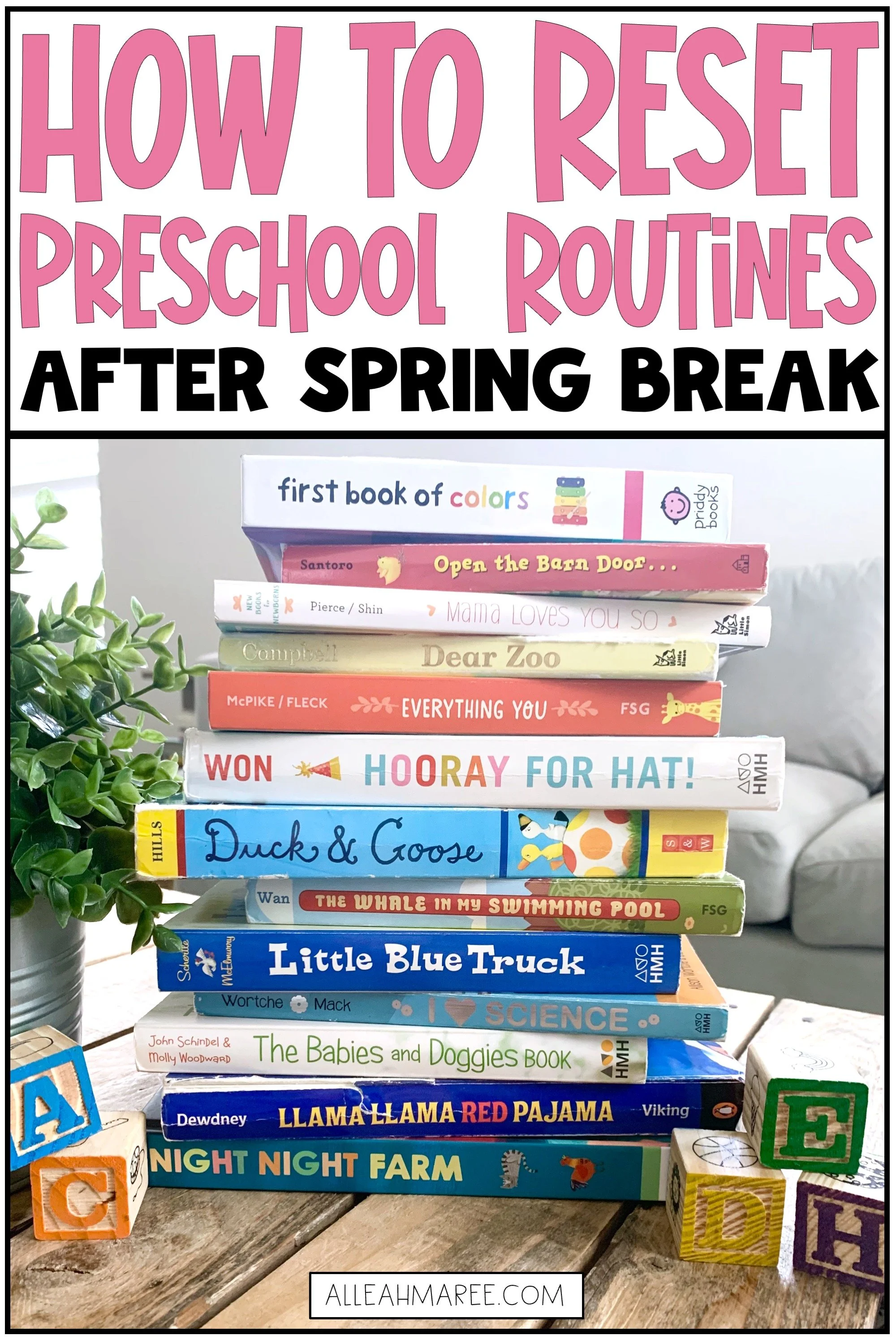
At home: Start with your kid’s favorite books, a fun crafts, or some simple sensory play.
This creates positive momentum and reduces resistance to parts of the day that may be less exciting.
5. Use Visual Schedules and Cues
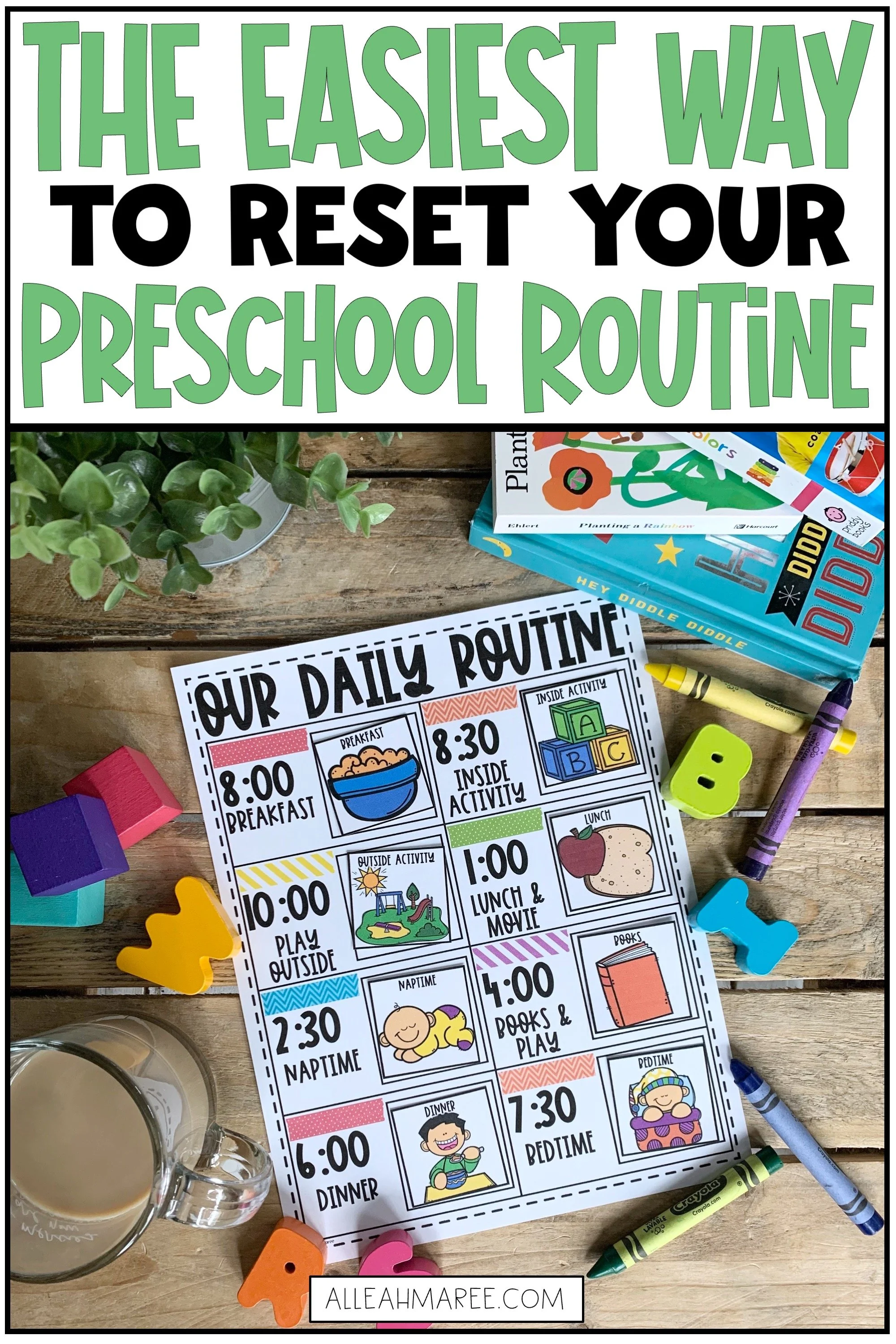
Preschoolers thrive on predictability and visual aids can make the transition back to learning routines feel smoother.
Post a simple daily schedule with pictures.
Use timers or songs for transition times.
At home, create a mini routine chart your child can follow each day to know what’s coming next.
Seeing what comes next helps children feel in control and reduces anxiety.
I use these visual schedules and routines with my kids every day!
6. Incorporate Movement and Play
After a break, sitting still can feel especially hard for the sweet little ones. So, balancing your learning times with lots of movement is super helpful!
Wondering how to easily add in movement?
Add dance breaks, outdoor play, or simple movement games.
Use hands-on learning activities around the room instead of worksheets.
Keep lessons short and interactive.
Play is still the most effective way preschoolers learn. And if you have especially active preschoolers, here are some ideas for creating a flexible routine for them.
7. Reset the Environment
A refreshed learning space can signal a fresh start for young minds.
You might consider:
Rearranging a learning corner or reading nook.
Rotating toys, books, or learning materials.
Updating bulletin boards, learning space decor, or themes.
Even small changes can renew curiosity and boost engagement more than you might expect.
8. Communicate Expectations Clearly
Preschoolers respond best when they know what’s expected of them.
Starting your time together by:
Reviewing rules and expectations with a positive outlook.
Role-play behaviors like listening, taking turns, or cleaning up.
Keep instructions simple and consistent.
Repetition and modeling are your friends during this phase of easing back into “normal”.
9. Be Patient…with Them and Yourself
Transitions always take time. Some days will feel easy and smooth, while others my feel very much the opposite.
Focus on positive progress, not perfect behavior.
Give yourself grace and flexibility as you re-establish your own learning time rhythms.
Remember: consistency over time will bring everything back together.
10. End Each Day on a Positive Note
How the day ends shapes how children feel about coming back tomorrow and is a time they remember pretty clearly most days.
In classrooms: Close with a connecting and calming story, reflection circle, or sharing happy times from the day
At home: Talk about your child’s favorite part of the day, let them pick their favorite book to read, or give them 10 minutes of your undivided attention to play anything they choose.
A positive ending builds anticipation for the next day’s learning and gives everyone those “warm fuzzies” to finish the day.
Resetting after spring break isn’t about jumping back into full and normal productivity mode. It’s more about rebuilding structure with care and consistency.
By focusing on connection, consistency, and a bit of play too, you’ll guide your preschoolers back into a learning routine that feels safe, effective, and so much fun too!
Whether you’re teaching a group or your own child, remember: small, steady steps create lasting habits.
You’ve got this…and so do they.
Cheering you on! 💛

P.s. When you’re ready to start teaching toddlers & preschoolers, my yearlong curriculum is complete and waiting for you. 💜